Why Is My Air Conditioner Not Blowing Cold Air?
Your air conditioner isn't blowing cold air because something is breaking the cooling chain — usually a thermostat set wrong, a clogged filter choking airflow, low refrigerant from a leak, a dirty outdoor condenser, or an iced-over evaporator coil. The system might still hum and push air through your vents, but if any one of those links is broken, what comes out feels lukewarm at best.
Key Takeaways
- Start at the thermostat. A surprising number of "broken" ACs are just set to FAN instead of COOL, or have dead batteries throwing off the readings.
- Dirty filters and dirty outdoor units are the top two DIY-fixable causes of an AC running but not cooling.
- Low refrigerant always means a leak — it doesn't get used up, so topping it off without finding the leak is wasted money.
- Shut the system off if you see ice on the indoor coil or refrigerant lines, then call a licensed HVAC tech before the compressor takes the hit.
If your air conditioner is running but not cooling, you're in one of the most frustrating spots a homeowner can be in — especially in the middle of an Ohio summer when the upstairs hits 82°F and the unit sounds like it's working. The short answer: airflow, refrigerant, or a sensor/control problem is breaking the cooling cycle, and the fix depends on which one.
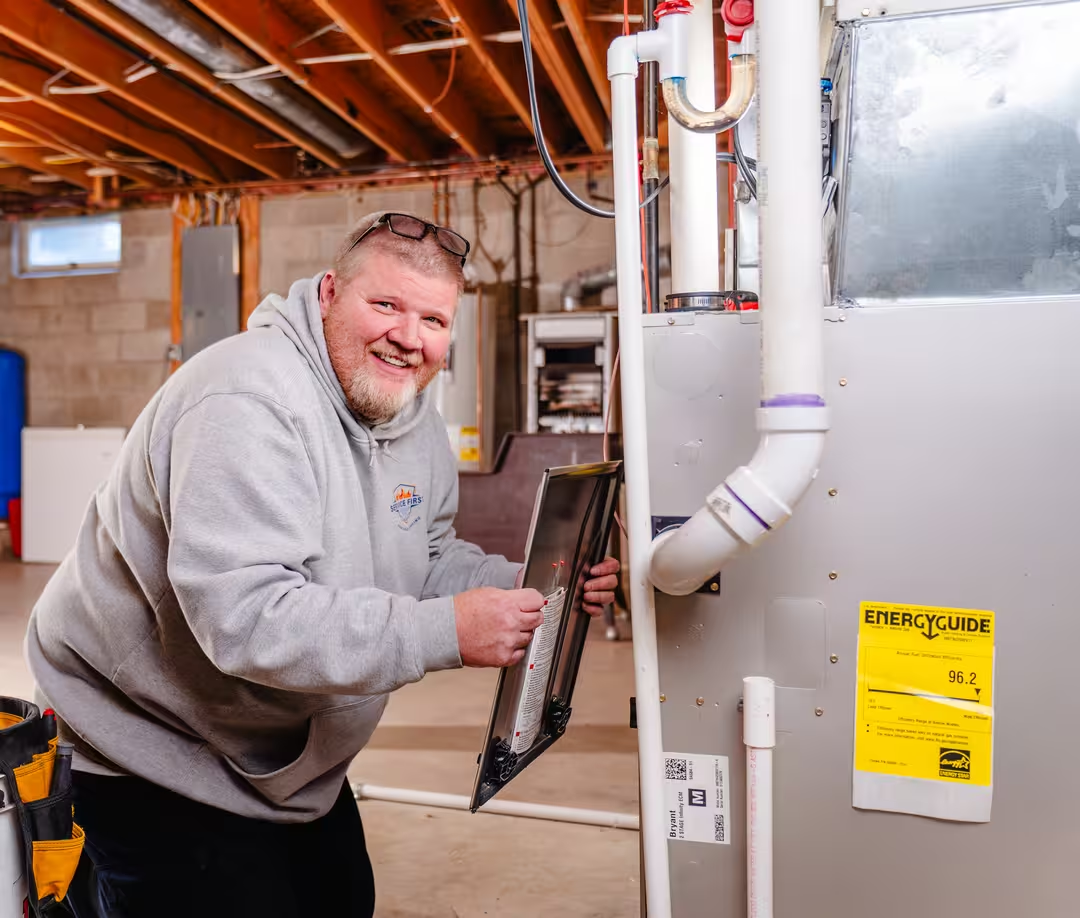
I'm Greg Nelson with Service First Heating and Cooling. I've been on hundreds of "my AC is blowing not cold" calls around Canal Winchester, Pickerington, and the greater Columbus area, and I can tell you this: about half of these calls turn into something the homeowner could've solved with ten minutes and a flashlight. The other half need a tech. In this guide I'll walk you through how to tell which one you've got, what to check before you pick up the phone, and when it's genuinely time to call somebody.

Why Is My AC Running But Not Cooling?
Your AC is running but not cooling because the indoor blower is still working — that's why you feel air at the vents — but the part of the system that actually removes heat has stopped doing its job. Cooling and air movement are two separate things, and most homeowners don't realize that until they're sweating through a service call.
The Thermostat Is Set Wrong
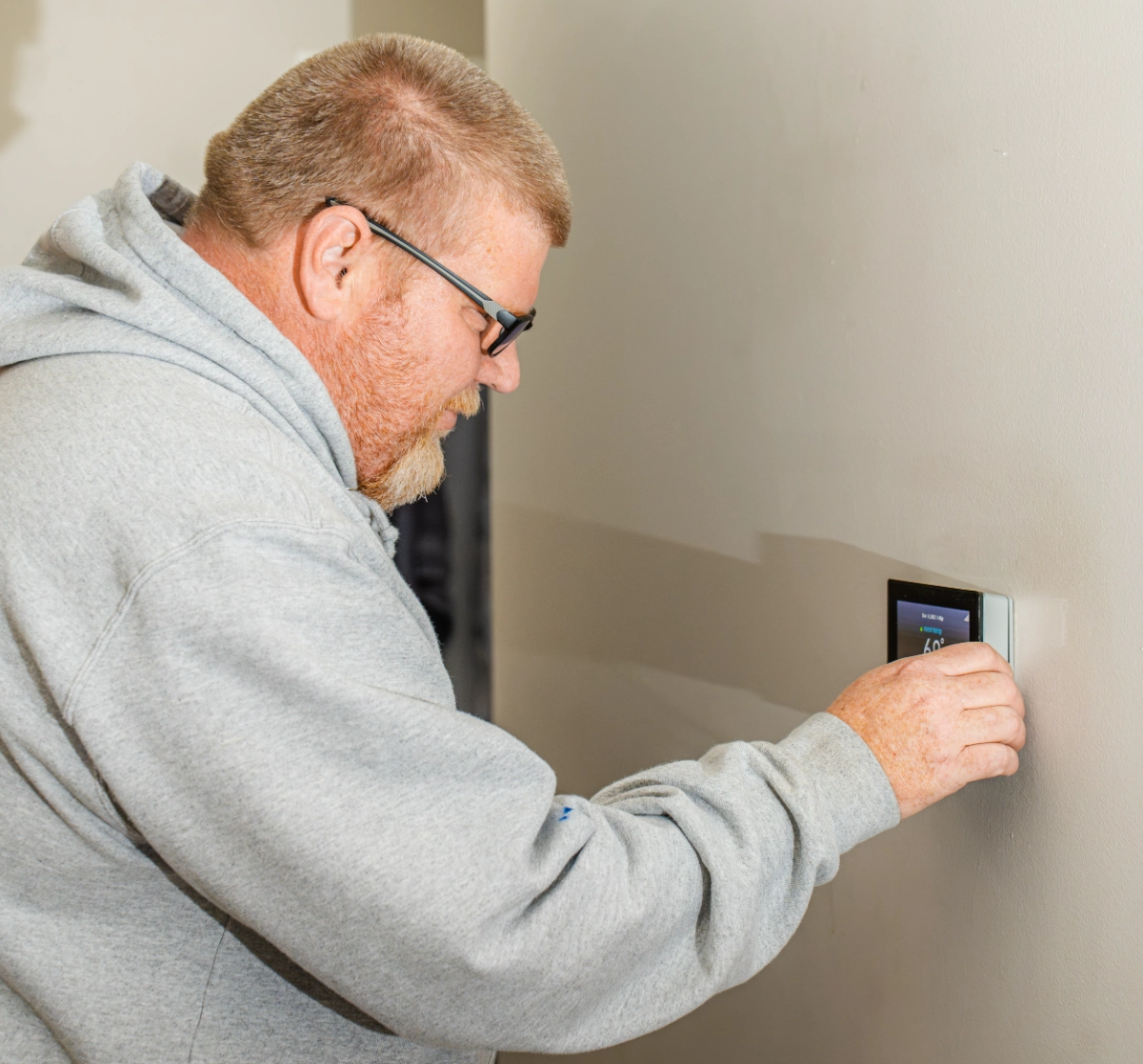
The thermostat being set wrong is the single most common reason I show up to a "broken" AC. Walk over and confirm it's set to COOL, not FAN or HEAT, and that the temperature is at least 3–5 degrees below the current room reading.
While you're there, check the batteries. A thermostat with weak batteries can read inaccurate temps or fail to send the cool call to the outdoor unit at all.
"I've driven 40 minutes to a service call, walked in, and flipped the switch from FAN to COOL. The homeowner felt terrible. I told them not to — that fan setting catches everybody." — Greg Nelson
The Air Filter Is Clogged
A clogged air filter chokes airflow across the evaporator coil and is the second most common reason an AC won't cool. Without enough warm return air moving across the coil, the system can't transfer heat efficiently — and in bad cases, the coil ices over and you get no cold air at all.
Pull your filter. If you can't see light through it, replace it. Check it every 30–90 days during cooling season.
The Outdoor Unit Is Dirty or Blocked
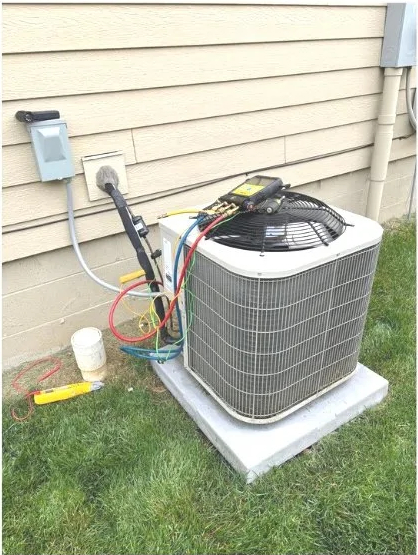
A dirty or blocked outdoor condenser unit can't release heat, which means the refrigerant cycling back inside is still warm. Walk outside and look at your condenser — the big metal box with a fan on top. If it's caked in cottonwood fluff, grass clippings, or dust, that's your problem.
Shut the system off, gently rinse the fins with a garden hose from the inside out, and clear at least two feet of space around the unit.
What Causes an Air Conditioner to Blow Warm Air?
An air conditioner blows warm air when the refrigeration cycle is broken — most often from low refrigerant, a frozen evaporator coil, or a failed compressor. Each of these stops the system from actually pulling heat out of your home, even though the blower keeps moving air around.
Low Refrigerant From a Leak
Low refrigerant is one of the top reasons an AC unit runs without cooling the house. Refrigerant doesn't get "used up" like fuel — if your system is low, you have a leak somewhere in the coil, line set, or fittings.
A licensed tech has to find the leak, repair it, and recharge the system. The EPA's Section 608 rules require certification to handle refrigerant, so this isn't a legal DIY fix even if you wanted it to be. And topping off without finding the leak just kicks the problem down the road.
Frozen Evaporator Coil
A frozen evaporator coil will absolutely make your air conditioner stop blowing cold air. Ice on the coil blocks airflow and prevents heat transfer, so what comes out of your vents is barely conditioned room air.
If you suspect a freeze-up, shut the system to OFF at the thermostat, switch the fan to ON, and let it thaw for several hours. Then replace the filter and turn it back on. If ice comes back, you've got an underlying airflow or refrigerant issue that needs a pro.
Failed Compressor or Capacitor
A failed compressor or weak capacitor will leave you with a running indoor blower and an outdoor unit that either won't start or won't pump refrigerant. You'll usually hear it — a humming outdoor unit that won't kick on, or a fan spinning without the compressor engaging.
This is tech territory. Capacitors store an electrical charge that can hurt you, and compressors are the most expensive single component in the system.
Why Is My AC Not Cooling the House Evenly?
Your AC isn't cooling the house evenly because either airflow is restricted in part of the system or the unit is undersized for the space it's trying to cool. A house where the upstairs is 8 degrees warmer than the downstairs almost always has a duct, insulation, or sizing issue layered on top of any AC problem.
Closed or Blocked Vents
Closed or blocked supply vents are an underrated cause of uneven cooling. Closing vents in unused rooms doesn't save energy — modern systems are sized to push a specific volume of air, and choking off vents creates back-pressure that hurts efficiency.
Walk through the house. Open every supply vent. Pull furniture, rugs, and laundry baskets off any return grilles.
Leaky or Undersized Ductwork
Leaky ductwork in attics, crawl spaces, or basements can lose 20–30% of the cool air before it reaches your rooms. If a particular room is always warmer, there's a good chance a duct serving that room is disconnected, crushed, or full of holes.
This needs a tech with proper diagnostic equipment to pressure-test the duct system.
Undersized AC Unit
An undersized AC unit will run constantly on hot days and still never get the house to setpoint. This is most often a problem in homes with additions, finished basements, or major renovations done after the original system was sized.
"If your AC ran fine for 15 years and only started struggling after you finished the basement or added a sunroom, the unit didn't break — your house got bigger and the system didn't." — Greg Nelson

What Should I Check Before Calling an HVAC Technician?
You should check the thermostat, the filter, the outdoor unit, and your circuit breakers before calling an HVAC technician. Running through these four things takes about 10 minutes and solves a meaningful percentage of "AC not blowing cold" calls without anyone having to come out.
Reset the Thermostat
Reset your thermostat by setting it to OFF for 60 seconds, then back to COOL with the temperature 5 degrees below room temp. This clears short-cycling glitches and re-initiates the cool call to the condenser.
Replace the Filter
Replace the filter even if you "just changed it." I've had homeowners swear it was new, only to pull a filter that looked like a charcoal briquette. When in doubt, swap it.
Check the Breaker
Check the breakers in your electrical panel — both the indoor air handler breaker and the outdoor condenser disconnect. A tripped breaker on the outdoor unit will give you exactly this symptom: blower running, no cooling.
If a breaker has tripped once, you can reset it. If it trips again immediately, stop and call a pro — that's an electrical issue you don't want to keep poking at.
Listen to the Outdoor Unit
Listen to your outdoor condenser. It should be making a steady, low hum with the fan spinning on top. Silence, a buzzing without fan movement, or a clunking sound all point to capacitor, contactor, or compressor problems that need a tech.
If you've worked through all four of these and the air conditioning unit is still not cooling, our team handles diagnostic visits for Canal Winchester homeowners every day during cooling season.
How Do I Prevent My AC From Failing in Hot Weather?
You prevent your AC from failing in hot weather by maintaining good airflow, scheduling annual professional maintenance, and not asking the system to do more than it was designed to do. Most of the breakdowns I see in July were preventable in April.
Schedule a Spring Tune-Up
Schedule an annual tune-up every spring before you really need cooling. A proper visit includes a refrigerant pressure check, coil cleaning, capacitor test, blower inspection, and condensate drain clearing. ENERGY STAR's HVAC maintenance recommendations emphasize this same checklist as the baseline for keeping a system efficient and reliable.
Keep the Outdoor Unit Clean
Keep two feet of clear space around the outdoor condenser and rinse the fins gently with a garden hose once or twice during cooling season. Skip the pressure washer — it'll bend the fins and make things worse.
Don't Overwork the System
Don't expect a residential AC to hold 68°F when it's 95°F outside. Most systems are designed to cool the house roughly 20 degrees below outdoor temperature. Setting the thermostat too low just makes the unit run nonstop without ever reaching setpoint, and that's hard on every component.
"An AC isn't lazy when it can't hit 65 in a heat wave. It's doing exactly what it was built to do — and asking for more is what burns out compressors in August." — Greg Nelson
FAQ: Air Conditioner Not Blowing Cold Air
How long does it take an AC to start blowing cold air?
A working AC should start blowing noticeably cold air within 5 to 15 minutes of turning on. If it's been running for half an hour and the air still feels lukewarm, something is wrong — start by checking the filter, thermostat, and outdoor unit.
Can I add refrigerant to my AC myself?
No. Adding refrigerant yourself is illegal without EPA Section 608 certification, and overcharging or undercharging will damage the compressor. Refrigerant work is a job for a licensed HVAC technician.
Why does my AC blow cold at first then warm?
Your AC blowing cold at first then warm usually means the evaporator coil is freezing up after running for a while. That points to restricted airflow (dirty filter, closed vents, dirty coil) or low refrigerant. Shut the unit off, let it thaw, replace the filter, and watch what happens — if it comes back, call a tech.
Will an AC fix itself if I leave it off?
An AC won't fix itself, but turning it off can prevent further damage if it's iced over or short-cycling. The ice will melt and the breakers will reset, but the underlying cause — low refrigerant, dirty coil, failing capacitor — won't go away on its own.
How much does it cost to fix an AC not blowing cold air?
Fixing an AC that's not blowing cold air ranges from the cost of a new filter (under $20) to a refrigerant leak repair and recharge ($300–$1,500+) to a full compressor replacement (often $1,500–$3,000). The diagnostic visit itself usually runs $90–$150 in our area.
When your air conditioner is not blowing cold air, the cause almost always falls into one of three buckets: a control or thermostat issue, a restricted-airflow problem you can fix yourself, or a refrigerant or component failure that needs a licensed tech. Working through the thermostat, filter, breakers, and outdoor unit takes ten minutes and solves a real percentage of these calls. Beyond that, the symptoms point you toward refrigerant, freezing, or electrical issues — and that's when it's worth getting a pro out before a small problem turns into a new compressor.
If you're in Canal Winchester, Pickerington, Reynoldsburg, or anywhere in the greater Columbus area and your AC is still not cooling after the basics, give us a call at Service First Heating and Cooling. We'll come diagnose the real cause, show you what we find, and tell you straight whether it's a quick fix or something bigger. Honest answers, no pressure — that's how we do it.