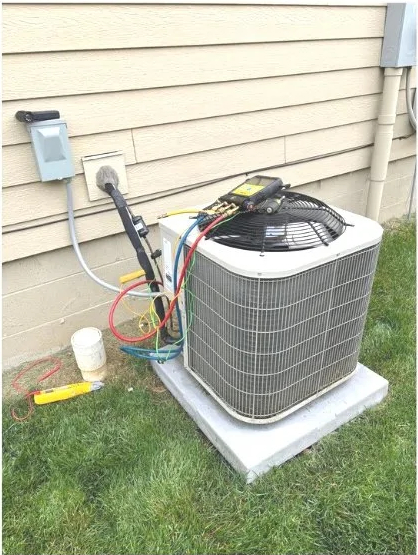

Why Is My Air Conditioning Unit Freezing Up?
Your air conditioning unit is freezing up because something is disrupting the balance between airflow and refrigerant inside the system. Nine times out of ten, it comes down to restricted airflow (a dirty filter, blocked vents, or a failing blower) or a refrigerant issue (low charge from a leak). When either side of that equation goes sideways, the evaporator coil drops below freezing and ice starts forming on the copper lines and coil fins.
Key Takeaways
- The two main culprits are restricted airflow and low refrigerant — usually a dirty filter, closed vents, a dirty coil, or a refrigerant leak.
- Turn the system off the moment you see ice — running a frozen AC can burn out the compressor, which is the most expensive part to replace.
- Most freeze-ups can be prevented with a fresh filter every 1–3 months and an annual tune-up before cooling season.
- Call a licensed HVAC tech if ice keeps coming back after you've thawed the unit and replaced the filter — that points to refrigerant or component issues that need tools and certification.
If you've walked over to your indoor air handler and seen what looks like a science fair volcano covered in frost — or noticed warm air blowing out of your vents on the hottest day of the year — you're dealing with a frozen AC. The short answer: your evaporator coil is iced over because either the airflow across it or the refrigerant flow through it is out of balance.
I'm Greg Nelson, and I've been crawling into attics, basements, and crawl spaces around Canal Winchester and the greater Columbus area for years working on air conditioners. Frozen units are one of the top three calls we get every summer at Service First Heating and Cooling, and I've seen every version of this problem you can imagine. In this article I'll walk you through exactly why an AC unit freezes up, what you can safely do about it yourself, and when it's time to put down the screwdriver and call a pro.
.webp)
What Causes an AC to Freeze Up?
An AC freezes up when the evaporator coil gets too cold and condensation on its surface turns to ice instead of draining away. The coil is supposed to run cold — that's how it pulls heat out of your house — but it's designed to stay just above freezing. Anything that throws off that delicate temperature window will cause ice.
Here are the four causes I run into most often on service calls.
Dirty Air Filter Blocking Airflow
A dirty air filter is the number one reason I find homeowners' AC units freezing up. When the filter is clogged, your blower can't pull enough warm return air across the coil, so the coil's surface temperature plummets and the moisture in the air freezes onto it instead of draining off.
"I'd estimate seven out of ten freeze-up calls I run get solved by a five-dollar filter and a couple of hours of thaw time. People don't realize how much that one thing matters." — Greg Nelson
Check your filter. If you can't see light through it, replace it. Do this every 1–3 months during cooling season, more often if you have pets or run the system hard.
Low Refrigerant From a Leak
Low refrigerant is the second-biggest cause of an iced-up AC, and it's the one homeowners can't fix themselves. When refrigerant levels drop, the pressure inside the evaporator coil falls, and lower pressure means a colder coil — cold enough to freeze.
Refrigerant doesn't get "used up" like gasoline. If your system is low, you have a leak somewhere — a pinhole in the coil, a loose flare fitting, or a crack in the line set. A licensed tech needs to find the leak, repair it, and recharge the system. Just topping off the refrigerant without finding the leak is a band-aid that'll leave you in the same spot next month.
Dirty Evaporator Coil
A dirty evaporator coil acts a lot like a dirty filter — it insulates the coil's surface, kills heat transfer, and drops the coil temperature into freezing range. This usually happens when filters have been neglected for years and dust has bypassed them and built up on the fins.
You can sometimes see this if you can access the coil cabinet, but cleaning it correctly takes the cabinet apart and uses a no-rinse coil cleaner. This is usually a job for an annual maintenance visit.
Blower Motor or Fan Problems
A failing blower motor or a fan running at the wrong speed will starve your coil of airflow just like a dirty filter would. If you've already replaced the filter and the unit is still freezing, the blower wheel might be caked with dust, the capacitor might be weak, or the motor itself might be on its way out.
You can sometimes hear this — a blower that sounds quieter than usual, or one that hums but doesn't kick up to full speed. That's a tech visit.
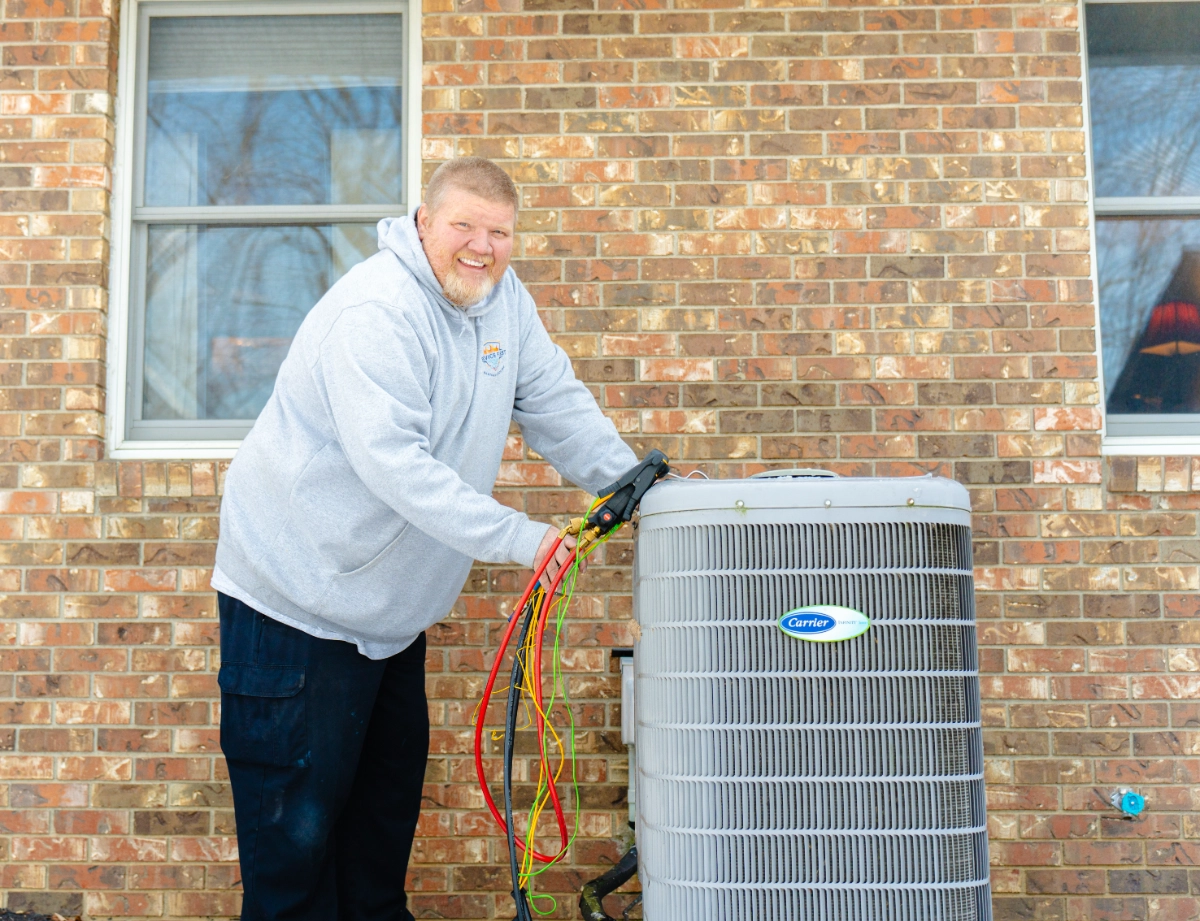
What Should I Do When My AC Unit Freezes Up Inside?
When your AC unit freezes up inside, turn it off immediately and let it thaw completely before doing anything else. Running a frozen system pushes liquid refrigerant back to the compressor, and a compressor is not designed to compress liquid. That's how you turn a $300 service call into a $3,000 replacement.
Step 1: Shut the System Down
Set your thermostat to OFF — not just to a higher temperature. You want the compressor and the outdoor unit to stop running entirely.
Step 2: Turn the Fan to "On"
Switch the thermostat fan setting from AUTO to ON. This runs the indoor blower without running the compressor, which pushes warm air across the frozen coil and speeds up the thaw. A full thaw can take anywhere from one to six hours depending on how iced over the unit is.
Step 3: Replace the Air Filter
While you wait, change your filter. If you don't know where the filter goes, it's either in a slot on the side of the air handler or behind a grille on a wall or ceiling return.
Step 4: Check Vents and Returns
Walk through the house and make sure no supply vents are closed and no return grilles are blocked by furniture, rugs, or laundry baskets. Restricted airflow at the vents matters just as much as restricted airflow at the filter.
Step 5: Let It Run and Watch It
Once the coil is fully thawed and dry, switch the thermostat back to COOL and let it run for an hour. If cold air comes out of the vents and stays cold, you're probably back in business. If you see ice form again within a day, you've got a deeper issue.
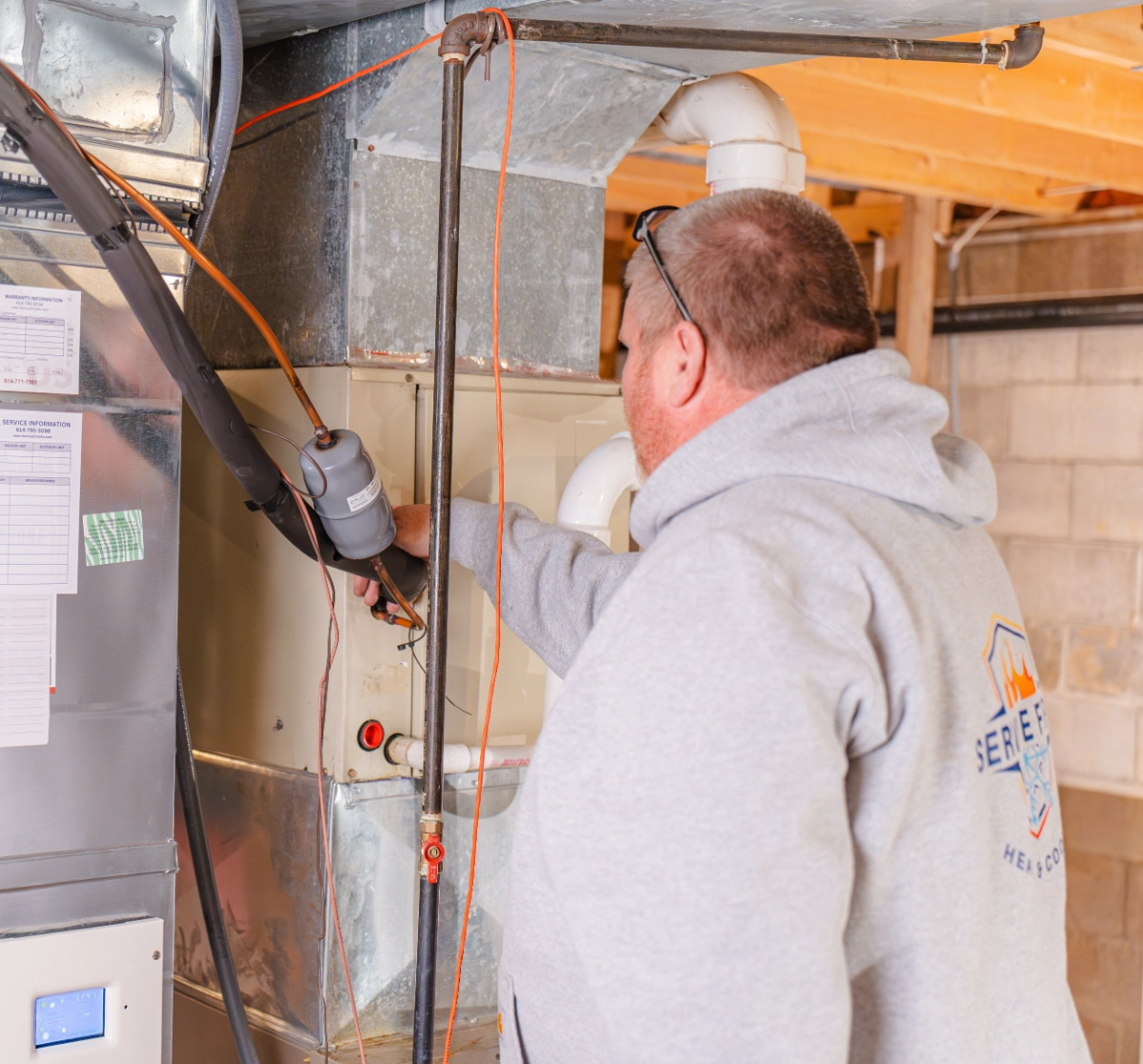
How Do I Fix a Frozen Evaporator Coil?
To fix a frozen evaporator coil, you have to thaw the ice completely, identify what caused the freeze, and then address the root cause — not just the symptom. Thawing alone is the easy part; finding and fixing the cause is where it gets technical.
When You Can Fix It Yourself
You can handle the fix yourself if the cause was a dirty filter, a tripped damper, or blocked vents. After the unit thaws, replace the filter, open everything up, and run the system. Watch it for the next 24 hours.
When You Need a Pro
Call an HVAC pro for anything involving refrigerant, electrical components, or coil cleaning. The EPA requires technicians to be Section 608 certified to handle refrigerant, so this isn't legally a DIY job even if you wanted it to be. A pro will:
- Pressure-test the system to confirm a refrigerant leak
- Repair the leak and weigh in a fresh charge
- Clean the evaporator coil with the proper chemicals
- Test the blower motor, capacitor, and TXV (thermostatic expansion valve)
"The hardest part of my job isn't fixing the AC — it's convincing folks that adding refrigerant without finding the leak is throwing money in the trash. Refrigerant doesn't evaporate. If it's low, it leaked." — Greg Nelson
What About a Frozen AC Line?
A frozen line on your air conditioning unit — that big copper line covered in ice running from the indoor unit to the outdoor condenser — is the same problem showing up further down the system. The ice on the line is just the freeze on the evaporator coil migrating outward. Same causes, same fixes.
Will a Frozen AC Unit Fix Itself?
A frozen AC unit will not truly fix itself, even though the ice will eventually melt on its own. The ice is a symptom of either an airflow problem or a refrigerant problem, and neither of those resolves without intervention. If you let the ice melt and turn the system back on without addressing the cause, it will freeze right back up — and each freeze-thaw cycle puts more stress on the compressor.
I've seen homeowners do the freeze-thaw dance for an entire summer trying to limp through to fall. By September, the compressor was toast and they needed a whole new condenser. That's the expensive way to learn this lesson.
How Do I Prevent My AC From Freezing Up Again?
You prevent your AC from freezing up by maintaining good airflow and catching small problems before they become big ones. Most of this is genuinely simple stuff that homeowners can stay on top of.
Change Your Filter on a Schedule
Set a calendar reminder for every 30, 60, or 90 days depending on your filter type. A 1-inch fiberglass filter needs replacing monthly. A 4- or 5-inch pleated media filter can go six months to a year. When in doubt, check it monthly and swap it when it looks dirty.
Schedule Annual Maintenance
Get a tune-up every spring before you really need the AC. A good maintenance visit includes coil cleaning, refrigerant pressure check, blower inspection, capacitor testing, and condensate drain clearing. According to ENERGY STAR's HVAC maintenance guidance, regular professional maintenance keeps systems running efficiently and catches issues early.
Keep Vents and Returns Clear
Don't close vents in unused rooms thinking you're saving money — modern systems are sized to push a specific volume of air, and choking off vents creates back-pressure that contributes to freeze-ups. The Department of Energy notes that closing vents in central systems can actually reduce efficiency and create airflow problems.
Don't Run the AC When It's Too Cold Outside
This one surprises people. If outdoor temps drop below about 60°F and you're still running the AC, the system can freeze up because it wasn't designed to operate in those conditions. On cool summer nights, open the windows instead.
If you're in our service area, our team handles seasonal tune-ups for Canal Winchester air conditioning systems all spring long, and catching a low refrigerant charge or weak capacitor in April beats finding out about it in July.
FAQ: Frozen Air Conditioner Questions
How long does it take for a frozen AC to thaw?
A frozen AC typically takes 1 to 6 hours to thaw fully, depending on how much ice has built up. Running the indoor blower (fan set to ON) speeds it up significantly. Don't try to chip the ice off — you'll damage the coil fins.
Can a frozen AC make me sick?
A frozen AC itself won't make you sick, but the conditions that cause it — high humidity, poor airflow, a dirty coil — can lead to mold growth on the coil and in the ductwork. That's worth addressing for indoor air quality reasons alone.
Why does my AC freeze up only at night?
Your AC freezes up at night because outdoor temperatures drop and the system, which is already marginal due to a small airflow or refrigerant issue, finally tips into freezing range. Daytime heat masks the underlying problem. If it freezes overnight and works fine during the day, you've still got an issue worth diagnosing.
Should I add refrigerant to my AC myself?
No. Adding refrigerant to your AC yourself is illegal without EPA certification, and beyond the legal issue, overcharging or undercharging refrigerant damages the compressor. Refrigerant work is genuinely a job for a licensed tech.
How much does it cost to fix a frozen AC?
Fixing a frozen AC ranges from the cost of a new filter (under $20) to a refrigerant leak repair and recharge ($300–$1,500+) depending on where the leak is and what refrigerant your system uses. R-410A and R-454B systems run different prices.
When your air conditioning unit is freezing up, it's almost always one of two things: airflow is restricted or refrigerant is low. The fix starts with shutting the system off, letting it thaw completely, replacing the filter, and watching what happens when you fire it back up. If ice comes back, you've moved out of DIY territory and into work that needs a licensed pro with proper diagnostic tools and EPA certification.
"Every freeze-up is a message from your AC. Sometimes it's saying 'change my filter.' Sometimes it's saying 'I'm leaking refrigerant.' Either way, it's worth listening to before the compressor gives out." — Greg Nelson
If you're in Canal Winchester, Pickerington, Reynoldsburg, or anywhere in the greater Columbus area and your AC keeps icing up no matter what you try, give us a call at Service First Heating and Cooling. We'll come diagnose the real cause, get you back to cold air, and tell you straight whether it's a quick fix or something bigger. No pressure, no upsells — just an honest answer from someone who does this every day.