When the cold sets in, your HVAC system works overtime. A few smart add-ons can make your home more comfortable, healthier, and easier to maintain all winter long. Here are four accessories we recommend most for Central Ohio homes—and why they’re worth it.
1) Filter Cabinets: Cleaner Air, Easier Changes
What they are:
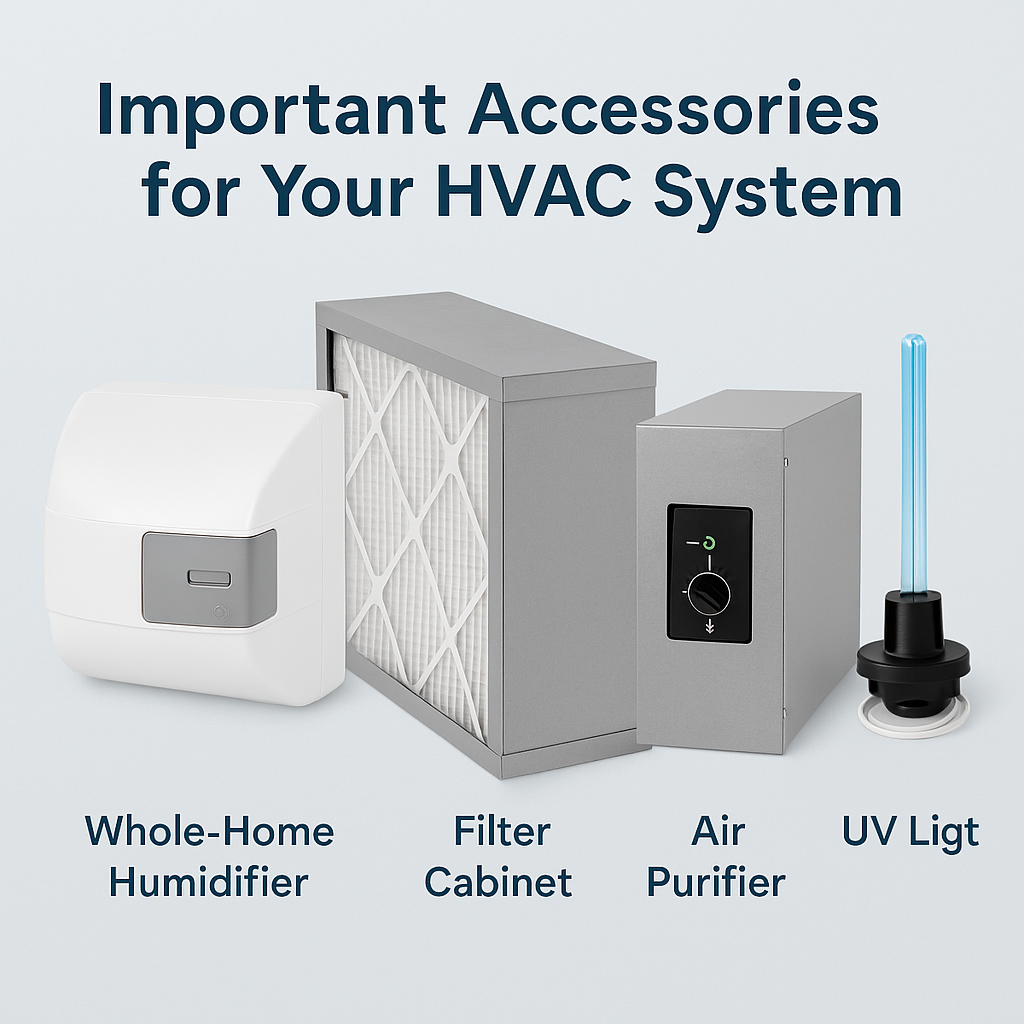
A filter cabinet is a metal housing installed on your furnace or air handler that holds a high-efficiency media filter — typically 3–5 inches thick. Unlike the standard 1-inch filters, these larger filters provide superior filtration, better airflow, and longer life between changes.Why it’s great in winter
Why it’s great in winter:
During the colder months, your HVAC system runs more often, and your home is sealed up tight. That means more dust, dander, and allergens circulating through your ductwork — and more strain on your equipment if the filter can’t keep up. If you’re tired of swapping out a thin 1-inch filter every month, you’re not alone. Standard filters clog quickly and often fail to catch the fine particles floating in your air. Worse, modern high-efficiency motors require better airflow, and a clogged or undersized filter can actually overheat or damage the motor. (We’ve already seen multiple service calls caused by this exact issue!) That’s where a filter cabinet makes all the difference.
Big Benefits of a Filter Cabinet:
- Reduced Maintenance – Larger filters last much longer. Instead of replacing filters monthly, most homeowners only need to change them every 6–12 months.
- Improved Indoor Air Quality – High-efficiency media filters capture more dust, pollen, pet dander, and even some bacteria, creating a healthier, cleaner home environment.
- Protects Your HVAC System – Cleaner air means less buildup on the blower motor, coil, and ductwork. That helps your system run more smoothly and last longer, while reducing repair needs.
- Energy Efficiency – With less dirt restricting airflow, your system doesn’t have to work as hard — helping lower energy bills and extending equipment life.
Good fit for:
- Busy households that don’t want to constantly change filters
- Pet owners dealing with hair and dander
- Families with allergy or asthma concerns
- Homeowners who want to protect their HVAC investment
👉 A filter cabinet is a simple, affordable upgrade that can make a big difference in your home’s comfort, air quality, and system longevity — especially during heavy heating season.
2) Whole-Home Humidifiers: Comfort Without the Static
What they are:
A whole-home humidifier is a permanently installed unit that integrates with your HVAC system, adding just the right amount of moisture to your indoor air as it passes through your ductwork. Controlled by a humidistat (similar to a thermostat, but for humidity), these systems maintain consistent comfort throughout the entire home, not just one room.
Why it’s great in winter:
When temperatures drop, indoor air tends to become very dry, especially once the furnace is running regularly. This can lead to discomfort, damage to your home, and higher energy costs.
A whole-home humidifier helps by:
- Boosting comfort at lower thermostat settings — Moist air feels warmer, so you can keep the temperature a bit lower without feeling chilled. That means potential energy savings.
- Improving health & comfort — Reduces dry skin, sore throats, chapped lips, and irritating static shocks that are common in winter.
- Protecting your home — Helps prevent wood floors, trim, and furniture from shrinking, warping, or cracking due to low humidity levels.
- Supporting better indoor air quality — Proper humidity can help ease allergy and respiratory symptoms by keeping nasal passages from drying out.
Convenience:
- 🤖 Automatic control: Many models self-adjust based on indoor and outdoor conditions, taking the guesswork out of humidity management.
- 🔄 Low maintenance: Typically, the only upkeep needed is a quick pad replacement once a year, often done during your annual heating tune-up.
- 🏡 Quiet and out of sight: Installed directly on your HVAC system—no bulky portable units, daily refills, or noisy fans required.
Good fit for:
- Homes with dry-air complaints during heating season
- Houses with wood floors, trim, or furniture
- Families prone to dry skin, sinus irritation, or static shocks
- Anyone looking to improve comfort and efficiency without adding extra daily maintenance
3) UV Lights: Keep the “Cold” Out of Your Cold Coil
What they are:
UV-C lamps are installed near the evaporator coil inside your HVAC system to help inhibit microbial growth—including mold and bacteria—on damp surfaces. This keeps the coil cleaner, improves airflow, and helps protect your indoor air from unwanted contaminants.
Why it’s great in winter
- Cleaner coil, better performance: A clean coil allows your system to operate more efficiently and maintain strong airflow, especially important during the heating season.
- Odor control: Helps reduce that musty “dirty sock” smell that can occur when a warm air stream passes over a damp coil.
- Healthier air: UV-C light kills or neutralizes airborne bacteria and surface mold before it can spread through your ductwork.
- Ozone-free operation: These systems use UV-C light only, with no ozone production.
Convenience:
- Continuous operation: Runs quietly in the background to help maintain a cleaner system year-round.
- Built-in safety features: Sealed-unit design prevents accidental exposure to UV light or voltage. Lamps will only operate when securely mounted to the duct.
- Easy maintenance: Annual bulb replacement is typically all that’s required, and the lamp light indicatormakes it easy to confirm operation.
- Simple installation: Plugs into a standard outlet for power.
Good fit for:
- Homes with past coil odor or microbial growth issues
- Families with allergies or asthma
- Homeowners who want low-maintenance system protection
✅ Pro tip: UV lights work best as part of a layered indoor air quality strategy. Pairing them with a high-efficiency filter or whole-home air purifier helps minimize airborne contaminants and protect your HVAC investment.
4) Whole-Home Air Purifiers: Next-Level IAQ
What they are:
These air purification systems integrate directly into your home’s HVAC ductwork. Instead of just filtering air, they use advanced ionization technology to help neutralize airborne particles, allergens, bacteria, viruses, and odors throughout the entire home.
Why it’s great in winter
- Boost for closed-window season: With less fresh air coming in, these systems actively treat and clean recirculated air — reducing dust, pet dander, smoke, and other airborne contaminants.
- Odor control: Helps minimize cooking smells, pet odors, and other indoor air pollutants that tend to linger in sealed-up homes.
- System protection: By reducing buildup on the coil and in the ductwork, they help maintain airflow and HVAC efficiency during heavy heating use.
Good fit for:
- Allergy or asthma households
- Pet owners
- Homes that see more indoor activity during winter
- Anyone wanting cleaner, fresher air with minimal upkeep
✅ Pro tip: Pairing a whole-home air purifier with a media filter cabinet creates a powerful layered defense against airborne contaminants — improving indoor air quality and keeping your system running at its best.
Quick Guide: Which Accessory Do I Need?
- “I forget to change filters.” → Filter Cabinet (longer-life media, better protection)
- “My skin is dry and shocks are everywhere.” → Whole-Home Humidifier
- “I notice musty smells from the vents.” → UV Coil Light
- “We want the cleanest air possible.” → Whole-Home Air Purifier (+ filter cabinet)
Professional Installation Matters
Correct sizing, placement, and settings are key to getting the benefits you expect—without restricting airflow or wasting energy. Our technicians ensure everything is matched to your system and home.
Unsure about the air in your home? Schedule an Indoor Air Quality Assessment with Service First Heating and Cooling
Our indoor air quality assessments consist of air quality testing with state-of-the-art equipment that tests for 9 critical air quality factors, including VOCs, particulate matter, CO2, humidity, temperature, etc. From there, our team will work with you to develop effective mitigation strategies to improve your indoor air quality and create a healthier living environment for you and your family. If you choose to purchase any of our high-quality IAQ products with installation through Service First Heating and Cooling, we will discount the assessment fee from the total cost of the product. It’s our way of making sure you get the best value while prioritizing your health and comfort.
Bonus: Our Service First Advantage Plan members get one free indoor air quality assessment with their plan.
Ready to Upgrade Your Winter Comfort?
Service First Heating & Cooling installs filter cabinets, humidifiers, UV lights, and whole-home air purifiers tailored to Central Ohio homes. We’ll help you choose the right combination for your comfort, air quality, and budget.
Call today to schedule a consultation or add-on installation—and get your home winter-ready the easy way.


.webp)