Why Is My Air Conditioner Leaking Water? A Canal Winchester HVAC Pro Breaks It Down
If you're wondering why is my air conditioner leaking water, the short answer is this: your AC is supposed to produce water, but it isn't supposed to leak it into your house. A puddle around your indoor unit almost always points to one of a handful of fixable problems — a clogged condensate drain line, a dirty air filter that froze the evaporator coil, a cracked drain pan, a failed condensate pump, or an installation that isn't pitched correctly.
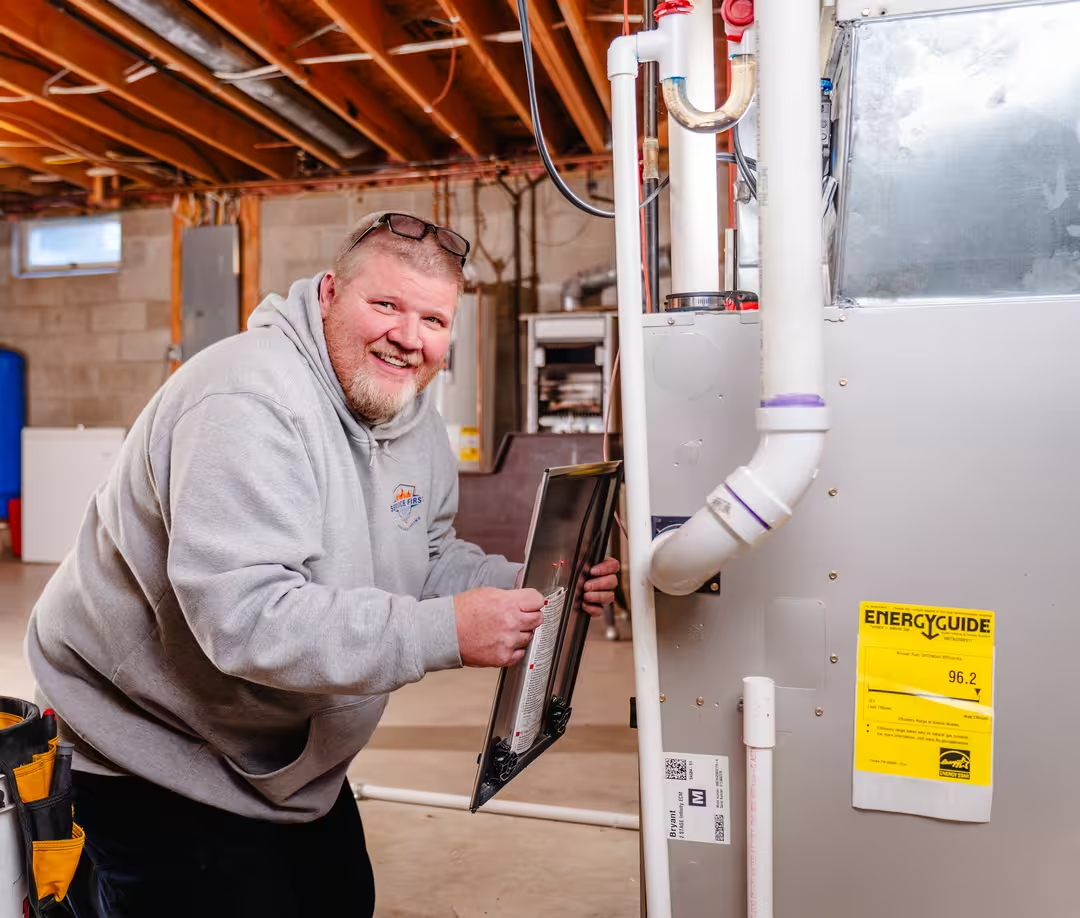
I'm Greg Nelson with Service First Heating and Cooling, and I've been crawling around Canal Winchester basements, attics, and utility closets long enough to know that nine out of ten of these calls come down to the same handful of culprits. Let me walk you through what I see on real service calls — and what you can check yourself before you pick up the phone.
Key Takeaways
- The #1 cause is a clogged condensate drain line. Algae and dust build up inside the PVC line, water backs up, and the drain pan overflows into your home.
- A dirty air filter is the second most common culprit. It chokes off airflow, freezes the evaporator coil, and when the ice melts it dumps more water than the pan can handle.
- Turn the system off the moment you see active leaking. Running a leaking AC can damage the blower motor, warp drywall, and short out electrical components.
- In central Ohio's humid summers, leaks get worse fast. Our 70%+ humidity means your AC pulls gallons of water out of the air daily — when drainage fails, you'll know within hours.

Why Does My Air Conditioner Produce Water in the First Place?
Your air conditioner produces water because cooling the air also strips moisture out of it — exactly like a cold glass of iced tea sweating on a July afternoon. That's not a malfunction; that's the system doing its job. The trouble starts when that water can't escape the way the manufacturer designed.
How the condensate system actually works
Warm, humid indoor air gets pulled across the evaporator coil inside your air handler or furnace cabinet. The coil is cold (because refrigerant is absorbing heat from the air), so water vapor condenses on it, drips into a drain pan underneath, and exits through a PVC condensate line that runs to a floor drain, a utility sink, or outside.
How much water is normal?
On a humid Canal Winchester afternoon in July, I've measured units pulling 5 to 20 gallons of water out of the air in a single day. That's a lot of plumbing happening quietly behind your furnace. When it's working, you never notice. When something blocks that flow, you notice within hours.
When normal turns into a problem
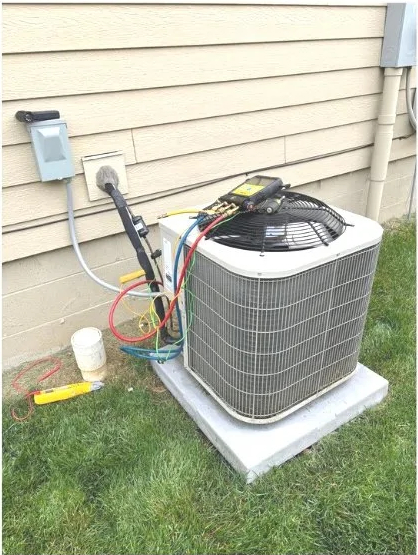
A small puddle outside near the condenser is usually fine — that's condensation runoff. Water dripping or pooling inside the home near the indoor unit is never normal and needs attention before it ruins drywall, subfloors, or the blower motor underneath the coil.
a

What Are the Most Common Reasons a Central AC Unit Drips Water Inside?
The most common reasons a central AC unit drips water inside are a clogged condensate drain line, a dirty filter that caused the coil to freeze, a rusted or cracked drain pan, a failed condensate pump, or an improperly pitched drain line. In my experience around Pickerington and Canal Winchester, the first two account for probably 75% of the calls I run.
1. A clogged condensate drain line
This is the call I run more than any other. The condensate line is dark, damp, and full of organic gunk — a perfect home for algae and biofilm. Over a season or two, that buildup chokes the line, water backs up into the pan, and once the pan fills, it spills onto your furnace cabinet or the floor. The fix is straightforward: a wet/dry vacuum on the outdoor end of the line usually clears it. Manufacturers like Bryant recommend flushing the line and treating it with drain tablets as part of routine maintenance to keep it from happening again.
2. A dirty air filter froze your evaporator coil
A clogged filter restricts airflow across the coil. Without warm air moving across it, the coil gets too cold, condensation freezes, and you end up with a block of ice where your evaporator should be. When that ice melts — and it always does — the volume of water far exceeds what the drain pan can hold. The U.S. Department of Energy recommends checking your filter monthly during cooling season, and honestly, that's the single cheapest piece of preventive maintenance you can do.
"I tell every customer the same thing — if you change one habit this summer, set a reminder on your phone for the first of every month to look at your filter. I've prevented more leaks with a $15 filter than with any repair I've ever done." — Greg Nelson
3. A cracked or rusted drain pan
If your system is 12 to 15 years old or more, the metal drain pan underneath the coil can rust through. Water drips out the bottom of the pan instead of running to the drain. There's no DIY fix for this one — replacing a primary drain pan means pulling the coil, which is a job for a tech.
4. A failed condensate pump
If your indoor unit sits in a basement (which is most of the homes I service in Canal Winchester), the water often can't drain by gravity — it gets pumped up and out by a small condensate pump. When that pump dies, fails to switch on, or clogs internally, water backs up into the pan and overflows. Sometimes you'll hear the pump cycling but not actually moving water, which is a giveaway.
5. Improperly installed or sloped drain line
The condensate line is supposed to slope downward at roughly 1/4 inch per foot. I still find brand-new installs where someone ran the line flat or even slightly uphill. Water can't run uphill, so it sits in the line, eventually backs up, and you get a leak that looks exactly like a clog but isn't.
Why Is My Central Air Conditioner Leaking Water in the Summer Specifically?
Your central air conditioner is leaking water in the summer specifically because that's when it's producing the most condensation. The hotter and more humid it gets outside, the harder your system works as a dehumidifier — and any weak link in the drainage chain shows up immediately.
Central Ohio humidity is harder on AC systems than people realize
Canal Winchester sits in a humid continental climate where summer dew points regularly hit the mid-70s. Your AC isn't just cooling air — it's wringing moisture out of it. The same drain line that handled an April day at 50% humidity may not handle an August afternoon at 80%.
Oversized systems leak more often
This one surprises people. An oversized AC short-cycles — it cools the room fast and shuts off before it has time to properly dehumidify. The coil never reaches the temperature it needs to drain water at a steady rate. You end up with bursts of condensation and pooling that overwhelms the pan. Family Handyman has covered this dynamic in detail — proper sizing matters more than most homeowners realize.
Refrigerant leaks compound the problem
Low refrigerant drops coil temperature below the dew point on the metal surface, which causes freezing — same outcome as a dirty filter, different root cause. If your filter is clean and you're still seeing ice or leaks, refrigerant is the next thing I check.
What Should I Do Right Now if My AC Is Leaking Water?
If your AC is leaking water right now, turn it off at the thermostat, place a towel or bucket under the active leak, and check the air filter before doing anything else. Running a leaking system causes more damage than the leak itself.
Step 1: Shut the system off
Set the thermostat to "off" — don't just bump up the temperature. You want the blower and compressor both stopped so no more condensation forms while you investigate.
Step 2: Check the filter
Pull it out and hold it up to a light. If you can't see light through it, that's your problem (or at least part of it). Swap in a fresh one.
Step 3: Look for ice on the indoor coil or refrigerant lines
If you see frost or ice, leave the system off for several hours and let it thaw completely. Running an iced-up system can crack the coil and turn a $200 fix into a $2,000 one.
Step 4: Inspect the drain pan and line
If the pan is full of standing water, that's a drainage problem — clog, failed pump, or bad pitch. Some homeowners can clear a soft clog with a wet/dry vac, but if it doesn't clear in a couple of minutes, call a pro before you start disconnecting fittings.
"The worst calls I get are from folks who tried to 'just take a look' and ended up disconnecting a drain line they couldn't reseat. By the time I get there, the leak isn't a drip anymore — it's a flood. Know your limits." — Greg Nelson
Step 5: Call a technician if it doesn't resolve
If the filter is clean, there's no visible ice, and the pan is still filling — that's a service call. For homeowners in our area, our Canal Winchester air conditioning team can usually be out same-day during cooling season.
How Can I Prevent My Air Conditioner From Leaking Water Again?
You can prevent your air conditioner from leaking water again with three habits: change the filter monthly, flush the condensate drain line a couple times per season, and schedule annual professional maintenance before peak summer hits.
Change the filter every 30 days during cooling season
I know the box says 90 days. In central Ohio with our pollen, pet dander, and humidity, 30 is more realistic. Anyone with shedding pets or allergies should be closer to every three weeks.
Flush the drain line yourself a few times per summer
Find the access tee on the condensate line near your indoor unit, pull the cap, and pour a cup of distilled white vinegar followed by a cup or two of warm water down it. Do this in May, July, and September and you'll head off most algae clogs before they happen.
Schedule a spring tune-up
ENERGY STAR's maintenance checklist specifically calls out inspecting the condensate drain as part of an annual tune-up, because they know how much downstream damage a clogged drain can cause. A good tech will check refrigerant charge, clean the coil, vacuum the drain, test the condensate pump, and verify the pan isn't corroding — all of which prevent the leak before it starts.
"Maintenance isn't about selling you parts you don't need. It's about catching the $50 problem before it becomes the $500 problem — or worse, the ceiling-coming-down-on-your-furniture problem." — Greg Nelson

Frequently Asked Questions
Is it dangerous to run my AC if it's leaking water?
Yes. Continuing to run a leaking AC can warp drywall, damage the blower motor sitting beneath the coil, short out the control board, and cause mold growth in the cabinet and surrounding insulation. Shut it off and address the cause before turning it back on.
How much does it cost to fix an AC that's leaking water?
In central Ohio, most condensate drain clogs run $150 to $300 to clear professionally. A new condensate pump is typically $250 to $450 installed. Drain pan replacement is more involved — often $500 to $1,000 because the coil has to come out. Refrigerant repairs vary widely depending on where the leak is.
Can I fix an AC water leak myself?
Sometimes — yes for a basic filter change or a soft drain line clog you can clear with a wet/dry vac. No for cracked drain pans, frozen coils that won't thaw, refrigerant issues, or anything involving the condensate pump's electrical. If you're not 100% sure what you're looking at, call a tech before you make it worse.
Why is water dripping from my AC vents inside the house?
Water dripping from interior vents usually means condensation is forming inside the ductwork itself, typically because the ducts run through an unconditioned attic and aren't properly insulated. It can also happen when the supply air is much colder than the surrounding space. This one's worth a professional diagnosis — it's almost never a simple fix.
How long can I wait to call someone if my AC is leaking?
Don't wait. Even a slow drip can put a gallon of water under your furnace overnight. Shut the system off, place towels or a pan under the leak, and call the same day if possible — especially in July or August when delay means days without cooling.
Don't Let a Small Drip Turn Into a Big Problem
Knowing why your air conditioner is leaking water puts you ahead of most homeowners — but knowing what to do about it matters more. The takeaways: check your filter first, never run a leaking system, and don't ignore a drip that's not getting better. Most leaks are simple. The expensive ones are the simple leaks that got ignored.
If you're in Canal Winchester, Pickerington, or anywhere in central Ohio and you've got water where it shouldn't be, give Service First Heating and Cooling a call. We'll diagnose the actual problem, fix what needs fixing, and skip the upsell on what doesn't. Got a question about your specific setup? Drop it in the comments — I read every one and I'll get you a straight answer.
— Greg Nelson, Service First Heating and Cooling