
The answer to heat pump vs furnace in Ohio isn't one-size-fits-all — it depends primarily on your home's fuel source. Natural gas homes often benefit most from a high-efficiency furnace, while propane and all-electric homes are typically better suited for a heat pump or dual-fuel setup. Understanding your options is the first step to making a smart, cost-effective decision for Central Ohio winters.
Key Takeaways
- If you have natural gas, a furnace is often the most cost-effective choice in Ohio — natural gas is typically cheaper than electricity.
- If you use propane, a heat pump (or dual-fuel system) can dramatically reduce your energy costs.
- All-electric homes should strongly consider a heat pump — it's far more efficient than electric resistance heat.
- Ohio's climate makes dual-fuel systems (heat pump + gas backup) a best-of-both-worlds option for many homeowners.
As the owner of Service First Heating & Cooling here in Central Ohio, I get this question almost every week: "Should I get a heat pump or a furnace?" It's a great question — and honestly, most articles online try to crown one a winner without knowing anything about your home. After years of installing and servicing HVAC systems across the Columbus area, I can tell you the answer really comes down to one thing: your fuel source. Let me break it down in plain terms so you can make the right call for your family.
What Is the Difference Between a Heat Pump and a Furnace?
A furnace creates heat while a heat pump moves it — and that fundamental difference shapes everything about how each system performs in an Ohio winter.
How a Furnace Works
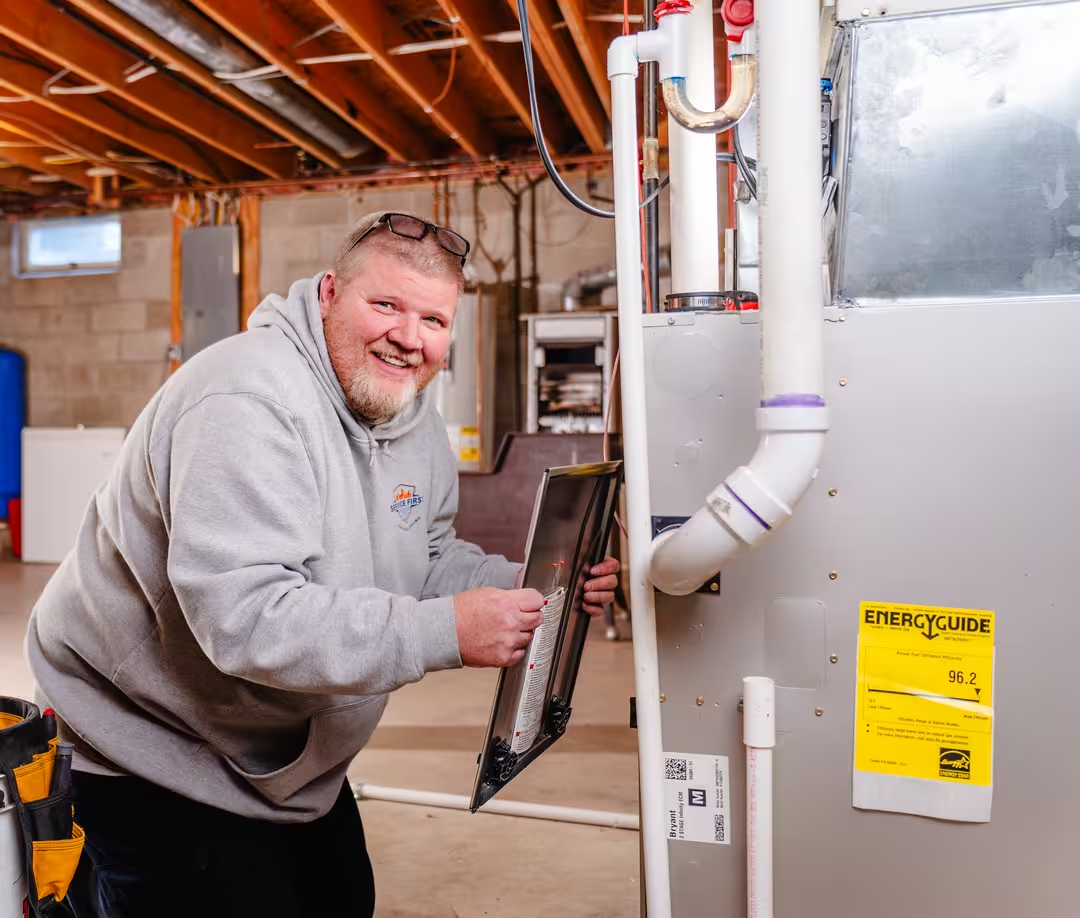
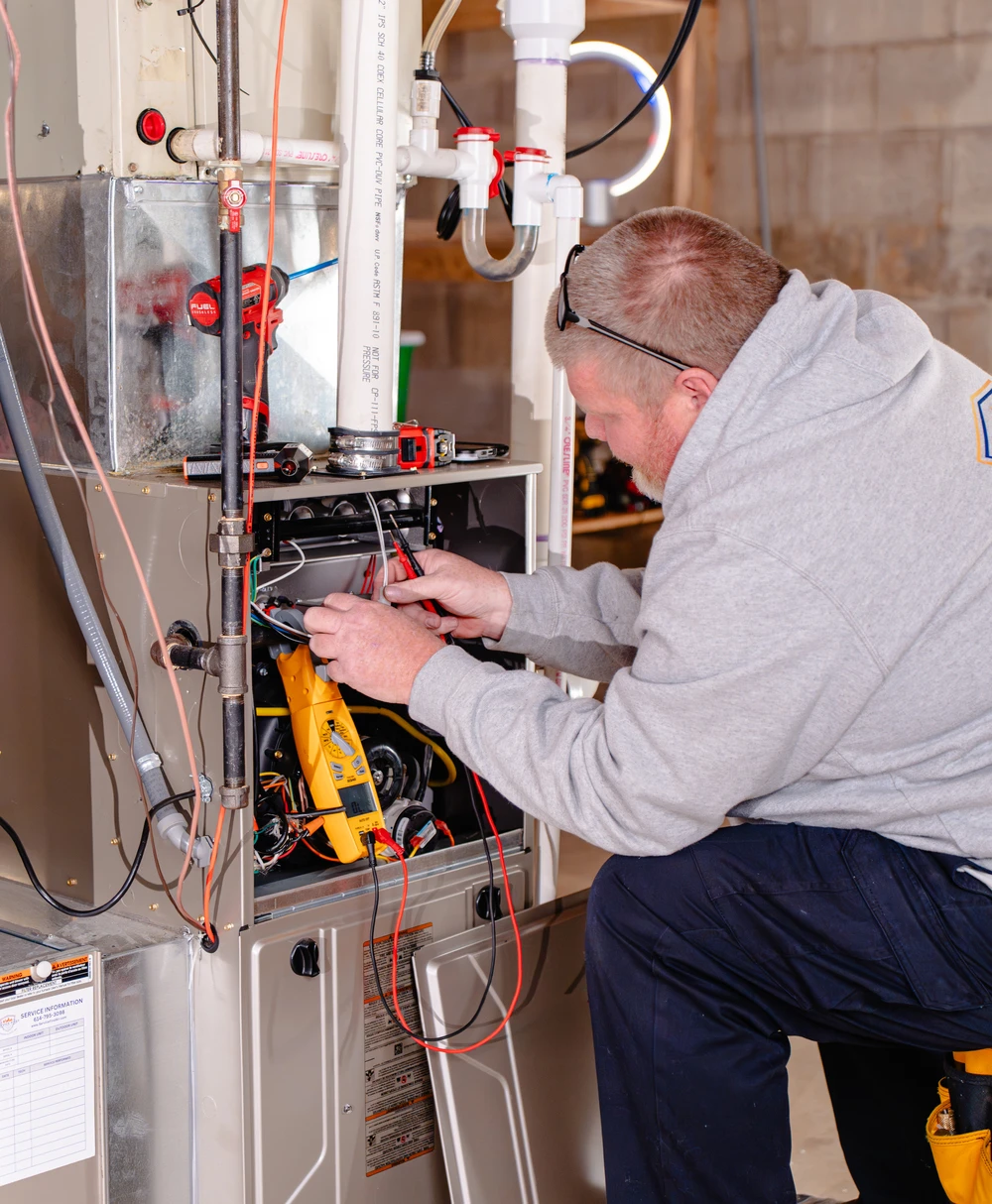
A furnace — most commonly powered by natural gas here in Ohio — burns fuel to generate heat, which then gets pushed through your ductwork and into each room. Furnaces are known for producing fast, powerful heat. When it's single digits outside and your home has gone cold, a furnace recovers quickly. That's a big deal in Central Ohio winters.
How a Heat Pump Works
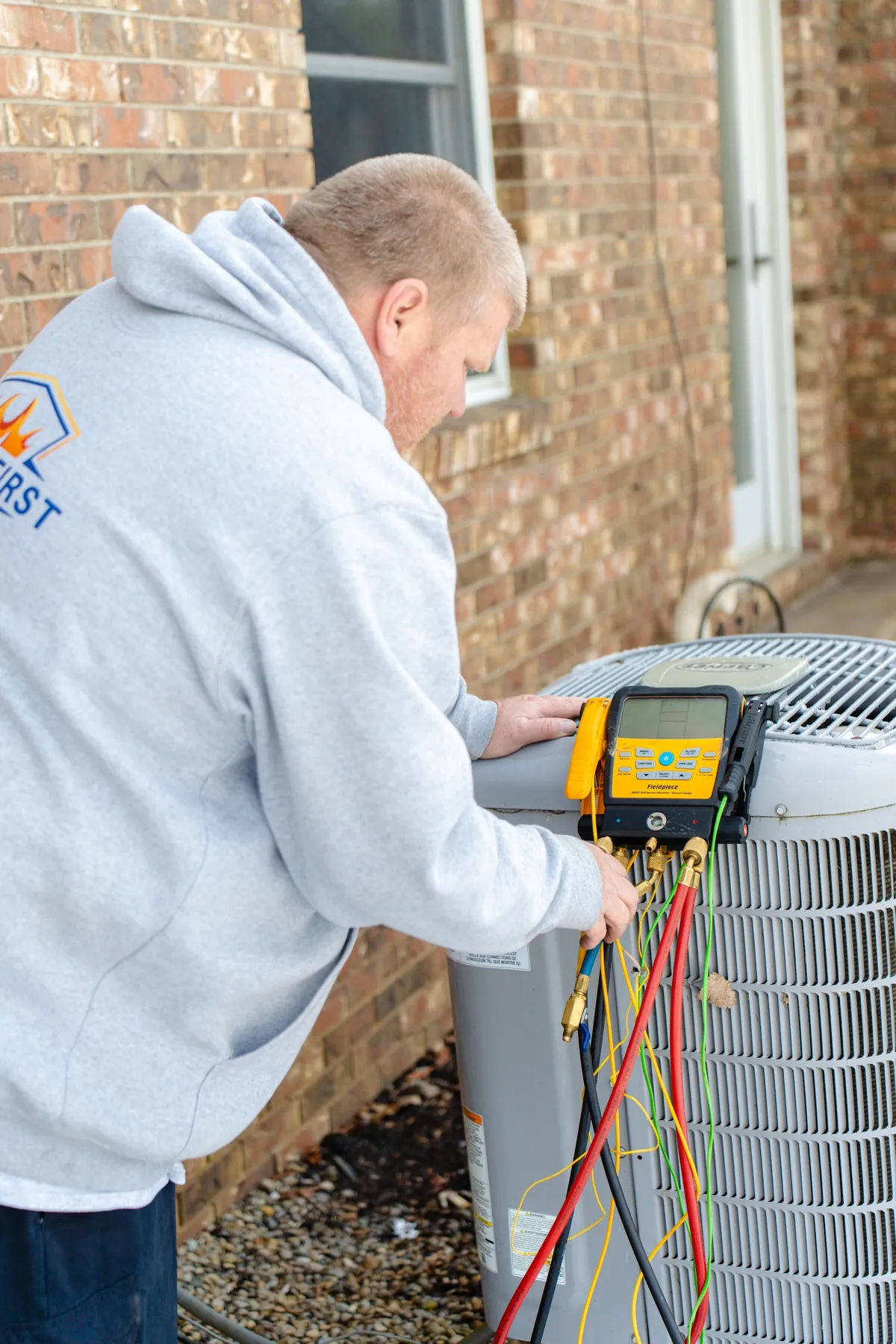
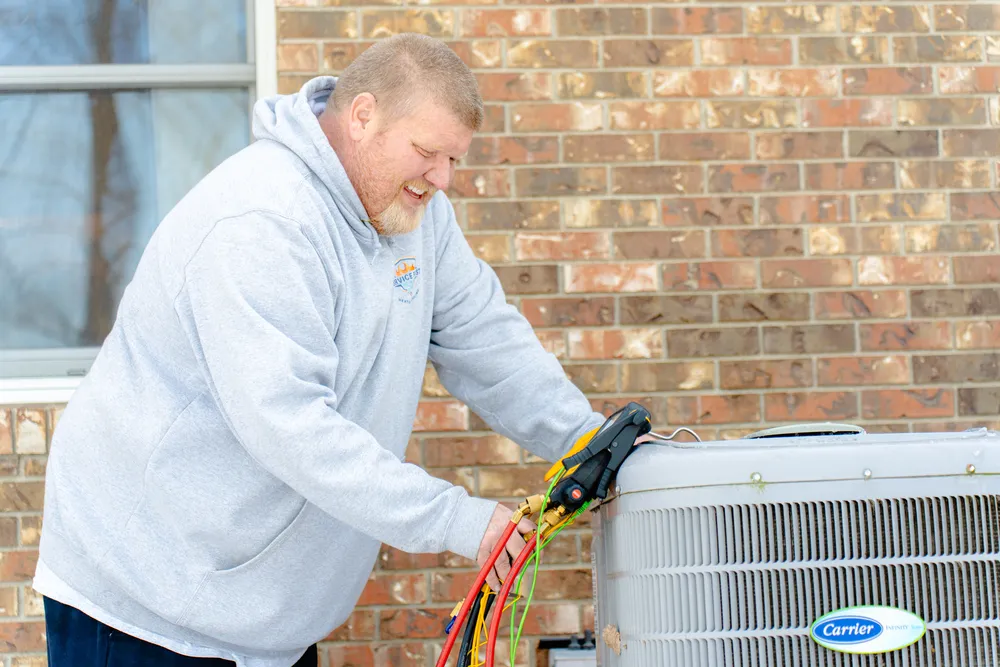
A heat pump doesn't create heat — it moves it. In winter, it pulls heat energy from the outside air and transfers it inside. In summer, it reverses that process and acts as an air conditioner. One system handles both heating and cooling, which is part of why they've become so popular. Modern cold-climate heat pumps have improved significantly and can operate effectively in temperatures well below freezing, though performance can still decrease in extreme cold.
Is a Heat Pump or Furnace Better for Cold Climates Like Ohio?
For extreme Ohio cold snaps, furnaces still have the edge — but heat pumps perform excellently during the moderate temperatures that make up most of our winter season.
Ohio sits in a mixed climate zone. We see plenty of mild days in the 30s and 40s — temperature ranges where heat pumps operate very efficiently. But we also get serious cold stretches in January and February where temps drop into the single digits. That dual reality is exactly why your fuel source matters so much when choosing between the two systems.
"The best system depends on what fuel source your home has available. Because in Central Ohio, the biggest thing homeowners should consider is: what costs less to run — electricity, natural gas, or propane?" — Greg Nelson, Owner, Service First Heating & Cooling
According to the U.S. Department of Energy, heat pumps can be two to three times more energy efficient than electric resistance heating — which is a significant advantage if your home is all-electric.
Should I Get a Heat Pump or Furnace If I Have Propane Heat?
If your home runs on propane, a heat pump is often the smarter financial move — and I recommend it to most of my propane customers.
Propane prices can spike hard in winter, especially during peak demand weeks. A heat pump can handle the majority of your heating needs during the moderate Ohio temps we experience for most of the season. For the coldest days, a dual-fuel setup — where the heat pump does the heavy lifting and propane kicks in as backup — gives you the best of both worlds: efficiency when it's mild, and powerful warmth when it's brutal.
"If you have propane, a heat pump is usually the best option. It helps reduce how much propane you burn through — and that translates directly to lower bills for the homeowner." — Greg Nelson
If you're in the Canal Winchester area and heating with propane, learn more about our heat pump services for Canal Winchester homeowners.
Are Furnaces More Cost-Effective Than Heat Pumps in Ohio?
For natural gas homes in Ohio, furnaces are frequently the more cost-effective option — because natural gas is typically cheaper than electricity right now.
If your home already has a natural gas line, you're in a strong position. Gas furnaces deliver fast, powerful heat and recover quickly after a cold night or an extended period of the home sitting empty. In Ohio winters that dip into the teens, that performance matters. High-efficiency gas furnaces today can reach 96–98% AFUE ratings, meaning almost all the fuel burned converts directly to heat.
"Right now, natural gas is cheaper than electricity — and that's something every homeowner should factor in. If you have natural gas, you often have no need to switch to a heat pump." — Greg Nelson
Carrier's heat pump vs furnace comparison notes that in regions with lower natural gas rates, furnaces often win on operating cost — which aligns with what we see in Central Ohio.
What Is the Best Heating System for an All-Electric Home in Ohio?
For all-electric homes, a heat pump is the clear best choice — it's significantly more efficient than electric resistance heating and handles both heating and cooling from one system.
Old electric furnaces and baseboard heat work by converting electricity directly into heat — a process that's effective but expensive to run. A heat pump, by contrast, moves heat rather than creating it, delivering 2–3 units of heating energy for every unit of electricity it consumes. Over an Ohio winter, that efficiency gap adds up to real money.
Heat Pump Pros and Cons for Ohio Homeowners
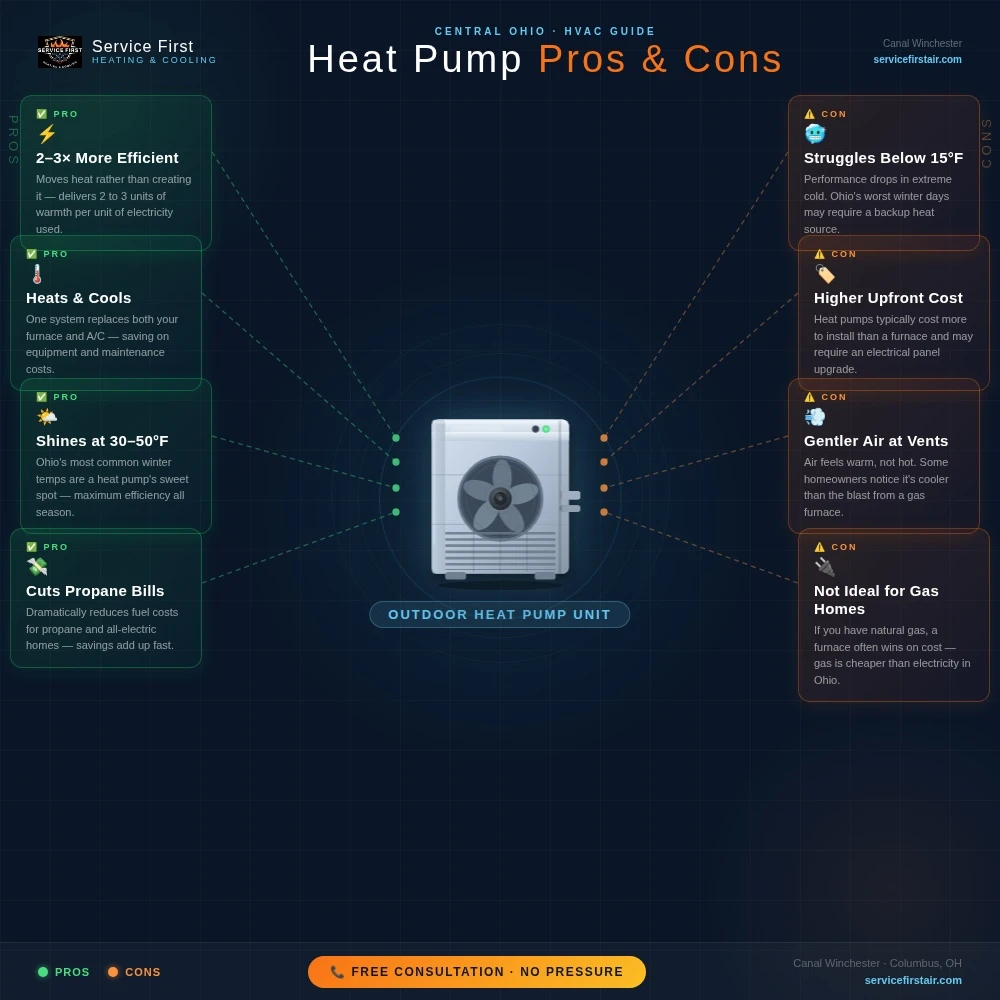
Heat pumps offer strong efficiency and year-round versatility, but upfront cost and cold-weather performance are real considerations for Ohio homeowners.
Heat Pump Pros
- High efficiency in mild temps (30°–50°F): Ohio sees a lot of these temperatures, and heat pumps excel in this range.
- One system for heating and cooling: No need for a separate A/C unit — the heat pump handles both.
- Great shoulder season performance: Fall and spring are where heat pumps truly shine, maintaining comfortable temperatures evenly and quietly.
- Ideal for propane and all-electric homes: Reduces dependence on expensive fuel sources.
Heat Pump Cons
- Performance drops in extreme cold: Even modern units run longer and rely more on backup heat when temps fall below 15–20°F.
- Higher upfront cost: Heat pumps can be more expensive to purchase and install, depending on the equipment and any required upgrades to your electrical system.
- May feel less 'hot' at vents: The air from a heat pump tends to be warmer than body temperature but cooler than furnace output — some homeowners notice this difference.
Frequently Asked Questions
Is a heat pump worth it in Ohio?
A: It depends on your fuel source. For propane and all-electric homes in Ohio, a heat pump almost always makes financial sense. For natural gas homes, a high-efficiency furnace is often the better value.
Can a heat pump replace a furnace in Ohio winters?
A: A heat pump can handle most Ohio winter days effectively, but during extreme cold snaps, a backup heat source is recommended. That's why dual-fuel systems (heat pump + gas furnace) are popular here.
What is a dual-fuel heat pump system?
A: A dual-fuel system pairs a heat pump with a gas furnace. The heat pump handles heating when it's efficient to do so, and the furnace automatically takes over during extreme cold. It combines efficiency with reliable performance.
How much does it cost to switch from a furnace to a heat pump in Ohio?
A: Costs vary based on the system type, your home's electrical capacity, and any required upgrades. Heat pumps generally carry a higher upfront cost than furnaces, but may offer lower operating costs depending on your fuel source.
What is the best HVAC system for Ohio winters?
A: For most Ohio homeowners, the best system is the one matched to their fuel source. Gas homes do well with a high-efficiency furnace. Propane and all-electric homes typically benefit most from a heat pump or dual-fuel setup.
Conclusion: The Right Answer Depends on Your Home
When it comes to heat pump vs furnace in Ohio, the honest answer is that both systems are good — it just depends on what's right for your home. If you have natural gas, a high-efficiency furnace is hard to beat on cost and performance. If you're on propane, a heat pump or dual-fuel setup can save you real money over time. And if your home is all-electric, a heat pump is the clear winner. At Service First Heating & Cooling, we don't push one system over another — we give you a straight answer based on your situation. That's what the Service-First approach means to us.
Ready to Find the Right System for Your Home?
If you're weighing a heat pump vs furnace for your Central Ohio home, let's talk. We'll take a look at your fuel source, your home's needs, and your budget — and give you an honest recommendation with no pressure. Service First Heating & Cooling serves Canal Winchester, Columbus, and surrounding communities.
📞 Call us or schedule your free consultation online today.